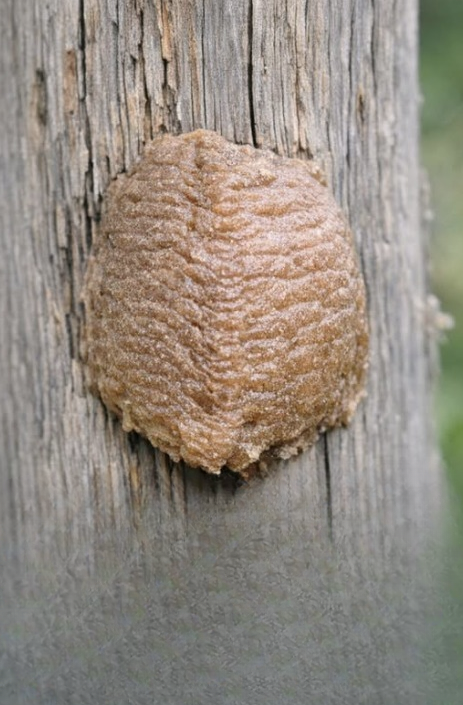
Finding a strange, foam-like brown mass attached to your fence or outdoor surface can feel surprising at first, especially if you have never seen anything like it before, but in many cases, this unusual structure is actually something beneficial rather than harmful.
What you are most likely looking at is a mantis egg case, known as an ootheca, which is created by a praying mantis and serves as a protective shell for dozens or even hundreds of tiny eggs developing inside.
The structure typically has a tan or brown color and a slightly foamy yet hardened texture, often measuring around one to two inches in length, and is usually attached to sturdy surfaces such as branches, fence posts, or outdoor furniture.
This unusual appearance is not random, as the outer layer is designed to protect the eggs from cold temperatures, moisture, and predators, allowing them to survive through winter until conditions are right for hatching.
While it may look unfamiliar or even concerning at first glance, the presence of a mantis egg case is actually a positive sign that your outdoor environment is healthy and balanced.
Praying mantises are natural predators that feed on many common garden pests, including flies, aphids, caterpillars, and other insects that can damage plants, making them an important part of the ecosystem.
By leaving the egg case undisturbed, you are essentially allowing a natural form of pest control to develop right in your yard, which can benefit your garden without the need for chemicals or intervention.
Inside the ootheca, the eggs remain protected throughout colder months, and when temperatures rise in spring, they hatch into tiny mantises that are ready to hunt almost immediately.
These young mantises quickly begin feeding on small insects, helping maintain balance in the environment as they grow and develop into adult predators.
It is important to note that mantis egg cases are completely harmless to humans and pets, as they do not sting, spread disease, or cause damage to structures, making them safe to have around your home.
In most situations, it is best to leave the egg case exactly where it is, allowing nature to take its course without interference.
However, if it is located in an area where it might be accidentally damaged, such as a frequently used gate or walkway, it can be carefully moved by transferring the surface it is attached to into a protected garden area.
When relocating, it is important to keep the structure intact, place it upright, and avoid crushing or scraping it, as this could damage the developing eggs inside.
Sometimes people confuse mantis egg cases with other objects such as wasp nests or fungus, but they can be distinguished by their firm, foam-like texture and elongated shape, unlike papery nests or soft, irregular growths.
What may seem strange at first is actually a fascinating example of nature working quietly in the background, creating a safe environment for future beneficial insects to develop.
In the end, that small structure on your fence is not something to fear, but rather a reminder of how ecosystems support themselves, offering a chance to observe one of nature’s most interesting life cycles right in your own backyard.