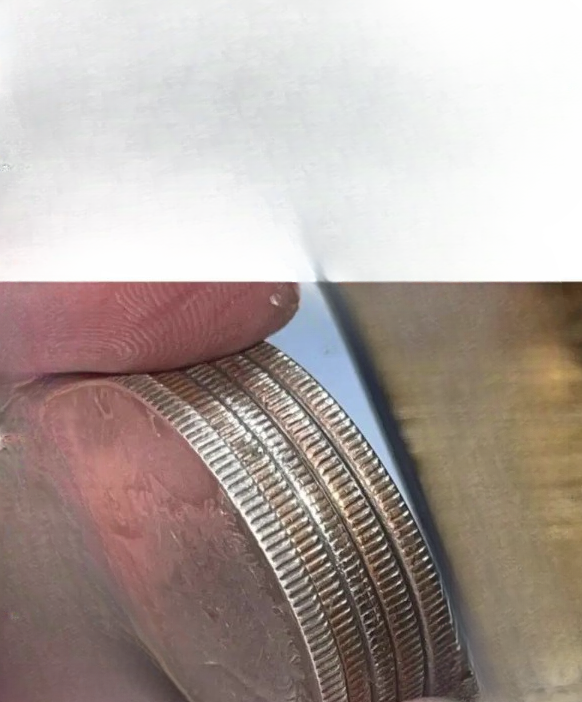
Coins are part of everyday life, often handled without much thought, yet one small detail on their surface holds a fascinating history, as the tiny ridges along the edges are not decorative but serve an important purpose that dates back centuries.
If you run your finger along the edge of a coin, you can feel these evenly spaced grooves, which were intentionally designed to solve a serious problem that once threatened entire economies when coins were made from valuable metals like silver and gold.
In earlier times, coins were worth exactly the value of the metal they contained, which made them vulnerable to a practice known as coin clipping, where small amounts of metal were shaved off the edges and collected over time without being immediately noticeable.
These altered coins would still circulate as full-value currency, slowly reducing trust in the system, as each coin carried slightly less value than it should, creating widespread financial instability over time.
As this problem grew, it became clear that stronger solutions were needed, not just punishment for those responsible, but a design that could prevent tampering from going unnoticed.
This led to the introduction of ridged edges, also known as reeded edges, a simple but effective innovation that made any attempt to alter a coin immediately visible, as even the smallest cut would disrupt the uniform pattern.
By adding these ridges, coins essentially became self-protecting, allowing people to detect tampering quickly and restoring confidence in the currency system.
Even today, although most coins are no longer made from precious metals, the ridges remain an important feature, helping machines and systems identify authentic coins based on their physical characteristics.
They also serve a practical role for people who are visually impaired, as different edge patterns allow coins to be distinguished by touch, making everyday transactions more accessible and inclusive.
Not all coins have ridges, however, as lower-value coins often have smooth edges, reflecting the fact that there was little incentive to alter them historically due to their lower material value.
This distinction between ridged and smooth edges became part of the design logic of currency, balancing security with practicality based on the value of each coin.
The continued use of ridges today shows how effective simple design solutions can be, as something created centuries ago still serves important functions in modern financial systems.
It also highlights a broader principle, that preventing problems through design is often more effective than trying to solve them after they occur, a concept that applies far beyond currency.
From physical objects to digital systems, embedding security into design remains one of the most reliable ways to maintain trust and stability over time.
In the end, those small grooves on coins are more than just texture, they are a reminder of history, innovation, and the ongoing effort to protect value in a way that is both simple and effective.