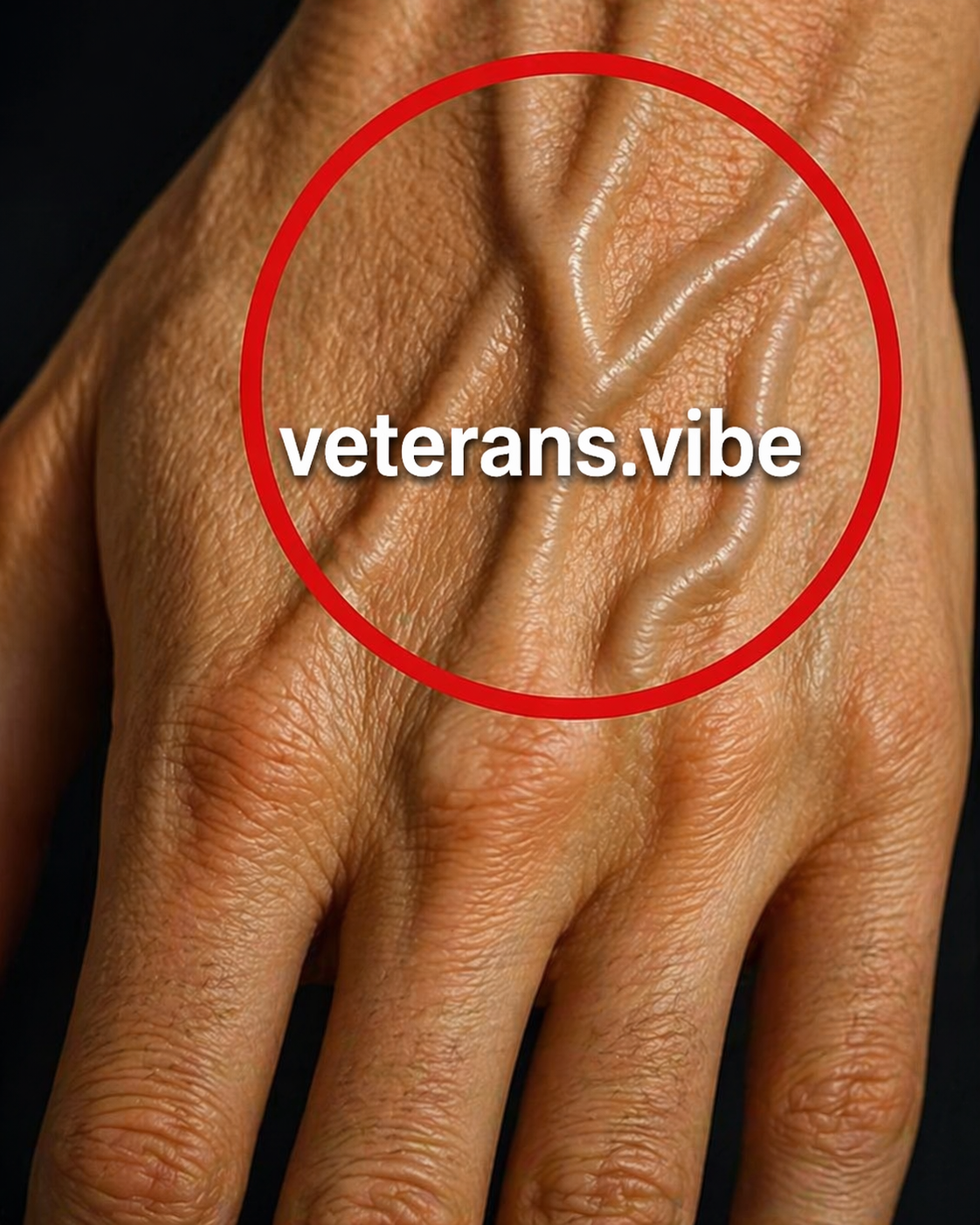
Many people occasionally look at their hands and notice something that seems different—veins that appear more visible, slightly raised, or darker than before. Because the hands are always in view, even small changes can quickly catch attention.
In recent years, there has been growing discussion online suggesting that visible veins on the hands could be linked to internal health issues, including kidney problems. These claims often raise concern and lead people to wonder whether such changes might indicate something serious.
To understand this properly, it’s important to separate common physical variations from actual medical symptoms.
Why Veins on the Hands Become More Visible
In most cases, prominent veins on the hands are completely normal. Their visibility depends on several natural factors related to the body and environment.
Aging
As people age, the skin naturally becomes thinner. The body produces less collagen and elastin, which help maintain skin thickness and elasticity.
With thinner skin, the veins underneath become easier to see. This is especially noticeable on the hands, where the skin is already delicate and exposed over time.
Body Composition
People with lower levels of body fat often have more visible veins.
Subcutaneous fat—located just beneath the skin—normally covers blood vessels. When this layer is thinner, veins appear more prominent.
This is commonly seen in:
- Athletes
- Physically active individuals
- People with lean body types
Genetics
Genetics play a significant role in how veins appear.
Some individuals naturally have more visible veins due to inherited traits. Just like other physical characteristics, vein visibility varies from person to person.
Physical Activity
Exercise can temporarily make veins more noticeable.
During physical activity, blood flow increases and blood vessels expand to deliver oxygen to muscles. This process can make veins appear larger and more visible.
Once the body returns to rest, the veins usually return to their normal appearance.
Temperature and Heat
Warm conditions cause blood vessels to expand as the body regulates temperature.
This can make veins appear more pronounced during:
- Hot weather
- After a warm shower
- In heated environments
Hydration Levels
Hydration also affects how veins appear.
When the body is slightly dehydrated, blood volume can decrease, making veins more visible beneath the skin.
Staying properly hydrated supports overall health, but occasional changes in vein visibility are common and usually temporary.
Are Visible Veins a Sign of Kidney Problems?
In general, visible veins on the hands are not considered a sign of kidney disease.
While some physical symptoms can reflect internal health issues, vein visibility alone is not used as a reliable indicator of kidney function.
How Kidney Disease Typically Appears
Kidney disease affects the body in specific ways that are usually not visible on the surface, especially in the early stages.
The kidneys are responsible for:
- Filtering waste from the blood
- Maintaining fluid balance
- Regulating electrolytes
- Supporting blood pressure control
When kidney function declines, these processes are disrupted.
Common Symptoms of Kidney Issues
Instead of visible veins, kidney-related conditions are more commonly associated with symptoms such as:
- Swelling in the feet, ankles, or face
- Changes in urination patterns
- Fatigue or low energy
- Foamy or unusual urine
- High blood pressure
- Nausea or reduced appetite
These symptoms develop gradually and are typically identified through medical evaluation rather than visual observation.
Fluid Balance and Its Effect on the Body
One of the key roles of the kidneys is managing fluid levels in the body.
When kidney function is impaired, fluid retention can occur. This often leads to swelling, also known as edema.
Interestingly, swelling can make veins less visible, not more.
This is an important distinction when considering the appearance of veins.
Dehydration vs. Fluid Retention
Two opposite conditions can affect how veins appear:
Dehydration
- May make veins appear more visible
- Temporary and often reversible
Fluid Retention
- Causes swelling
- May reduce vein visibility
This further shows that visible veins alone are not a reliable indicator of kidney health.
When Veins May Appear More Noticeable in Medical Contexts
In certain medical situations, changes in vein appearance may occur—but not for the reasons often assumed.
For example, individuals undergoing advanced medical treatment for kidney failure may have visible veins due to specific procedures.
Dialysis and Vascular Access
In cases of advanced kidney disease, some patients require dialysis.
To support this treatment, a surgical connection between an artery and a vein may be created. This allows for efficient blood flow during treatment.
As a result, the vein may become larger and more visible over time.
However, this is a result of medical intervention—not a natural symptom of kidney disease.
When to Seek Medical Advice
While visible veins are usually harmless, certain symptoms should not be ignored.
It may be helpful to consult a healthcare professional if you notice:
- Persistent swelling
- Ongoing fatigue
- Changes in urination
- Unexplained high blood pressure
- Shortness of breath
These signs may require further evaluation.
How Kidney Health Is Properly Evaluated
Kidney function cannot be determined by visual appearance alone.
Healthcare providers use specific tests to assess kidney health, including:
Blood Tests
Measure waste levels such as creatinine and calculate kidney function.
Urine Tests
Detect protein or other abnormalities.
Blood Pressure Monitoring
High blood pressure is closely linked to kidney health.
Imaging Tests
Used when necessary to examine kidney structure.
These methods provide accurate information about kidney function.
Understanding Normal Body Changes
The human body naturally changes over time.
Features like visible veins may appear different due to:
- Age
- Lifestyle
- Environmental conditions
Recognizing these normal variations can help reduce unnecessary concern.
Final Thoughts
Visible veins on the hands are usually a normal part of human anatomy.
They often reflect natural factors such as aging, body composition, or temporary conditions like heat or activity.