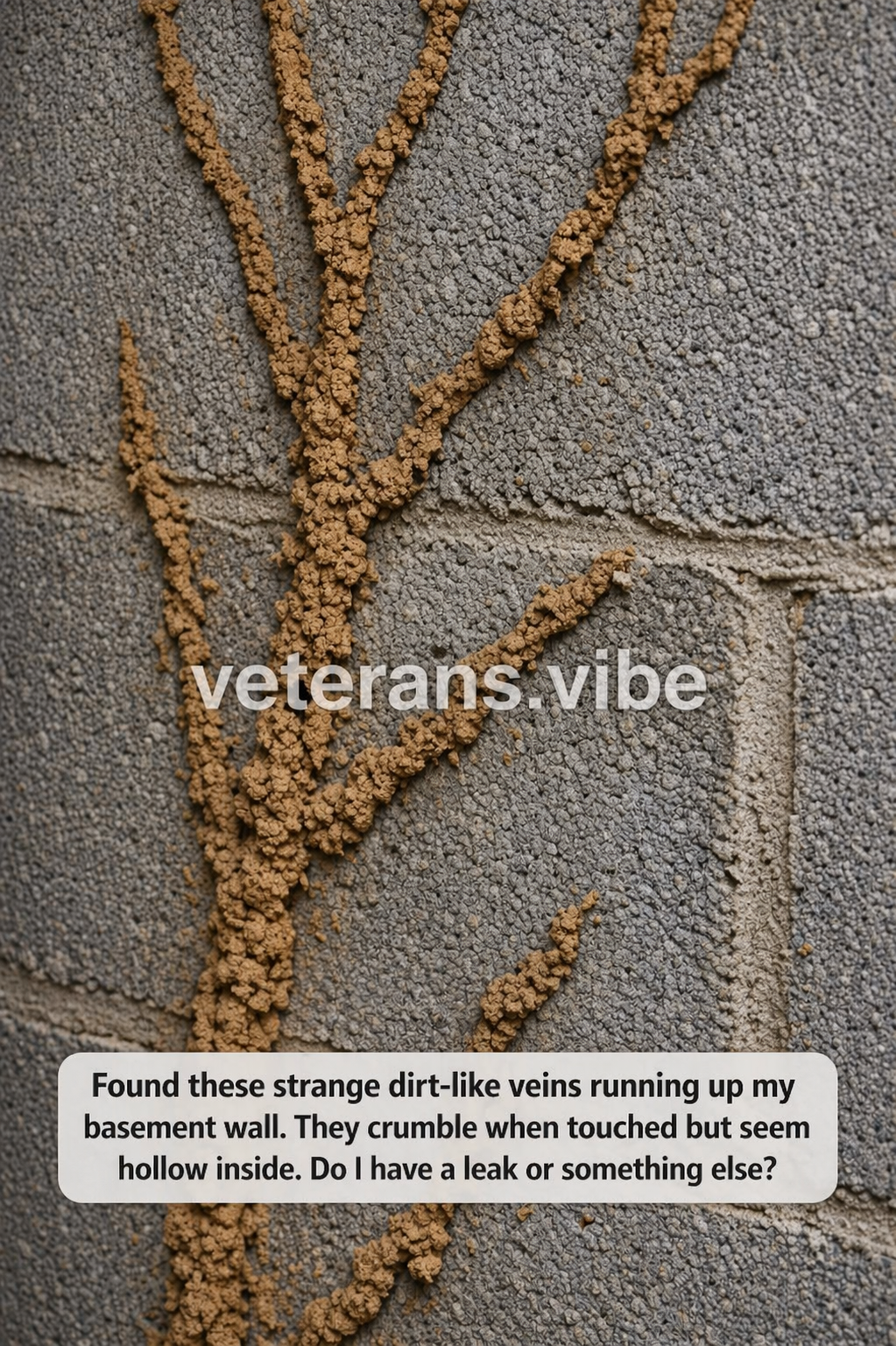
If you’ve noticed thin, dirt-like lines running along your basement walls, it’s something worth paying attention to.
At first glance, these markings may seem harmless. Many homeowners assume they are caused by dust, dried mud, or even minor water stains. However, in some cases, these formations can indicate a more serious issue that should not be ignored.
Understanding what these lines are and what they may represent can help you protect your home from potential long-term damage.
What Are These Dirt-Like Lines?
In many situations, these markings are known as termite mud tubes.
These are small, narrow tunnels built by subterranean termites using a mixture of:
- Soil
- Wood particles
- Moisture
They serve as protective pathways that allow termites to travel safely between their underground colonies and the wooden structures inside your home.
Why These Formations Matter
While they may appear minor, mud tubes can be an early sign of termite activity.
Termites feed on wood and other materials that contain cellulose. Over time, they can cause damage from the inside out, often without immediate visible signs.
This means that what looks like a simple line on a wall could point to hidden activity within your home’s structure.
How to Recognize Termite Mud Tubes
Mud tubes have several distinct characteristics that can help you identify them:
- Brown or dirt-colored appearance
- Thin, tube-like structure
- Can run vertically or horizontally along walls
- Fragile and crumbly when touched
- Hollow inside
If you gently break a section open, you may notice small tunnels or, in some cases, insect movement.
Termites vs. Moisture Residue
It’s common for homeowners to confuse termite mud tubes with signs of moisture or mineral deposits.
Here’s how to tell them apart:
Termite Mud Tubes
- Structured and tube-like
- Brown in color
- Hollow interior
- Break apart into small pieces
Moisture or Mineral Residue
- White or chalky in appearance
- Powdery texture
- No defined structure
- Easily wiped away
Identifying the difference is important for determining the next steps.
Why Termites Build These Tubes
Termites rely on specific conditions to survive. They need:
- Moisture
- Darkness
- Protection from open air
Mud tubes help them maintain these conditions while moving between their nest and food sources.
You can think of these tubes as hidden pathways that allow termites to remain protected while traveling through your home.
Other Signs to Watch For
Mud tubes are a strong indicator, but they are not the only sign of termite activity.
Other warning signs include:
- Wood that sounds hollow when tapped
- Warped or weakened surfaces
- Small piles of debris or residue
- Discarded wings near windows or doors
- Soft or damaged wood
If you notice more than one of these signs, it may be time to investigate further.
Areas to Inspect in Your Home
If you find mud tubes, it’s important to check other areas where termites may be active:
- Wooden beams and supports
- Floor edges and baseboards
- Crawl spaces
- Window and door frames
- Foundation cracks
Termites often expand their activity over time, so early inspection is key.
Can This Affect Your Home’s Structure?
Yes, termite activity can affect structural elements over time.
Because termites consume wood from the inside, damage may not be visible immediately. However, prolonged activity can weaken important parts of your home, including:
- Support beams
- Flooring
- Load-bearing structures
Addressing the issue early can help prevent more extensive repairs later.
What To Do If You Notice These Tubes
If you discover mud tubes in your basement or elsewhere in your home, consider the following steps:
1. Stay Calm
Not all findings indicate severe damage, but they should be taken seriously.
2. Document the Area
Take photos of the tubes and surrounding areas for reference.
3. Avoid Disturbing Them Repeatedly
Breaking tubes may temporarily disrupt activity but can also cause termites to move elsewhere.
4. Monitor for Changes
If tubes reappear after being removed, this may indicate active movement.
When to Consider Professional Help
In some cases, it’s best to consult a professional, especially if:
- Tubes return after removal
- You notice visible damage to wood
- You observe insect activity
- The affected area continues to expand
Professionals can assess the situation more thoroughly and recommend appropriate solutions.
Prevention Tips for the Future
Preventing termite activity is often easier than addressing it later.
Helpful steps include:
- Fixing leaks promptly
- Keeping basement areas dry
- Improving ventilation
- Avoiding direct contact between wood and soil
- Sealing cracks in foundations and walls
- Scheduling regular home inspections
These measures can reduce the chances of termites finding suitable conditions in your home.
Final Thoughts
Thin, dirt-like lines on your walls may seem minor at first, but they can sometimes signal a deeper issue.
Paying attention to these early signs allows you to act before the situation becomes more serious.