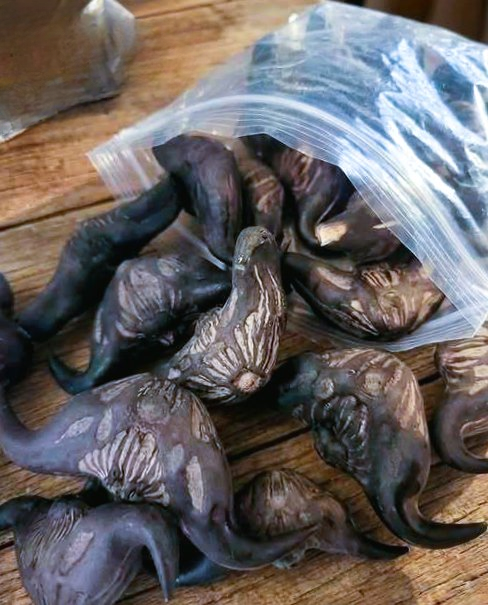
For thousands of years, humans have relied on nature for survival. Long before supermarkets and packaged foods existed, people depended on what they could gather from forests, fields, and rivers. Among these natural food sources, wild roots played an important role. They provided nourishment during harsh winters, times of famine, and periods when cultivated crops were not available.
This knowledge—what to eat, how to prepare it, and what to avoid—was passed down through generations. Families and communities shared their experience, teaching younger members how to survive using the resources around them.
However, while traditional knowledge is valuable, modern science has revealed an important truth: not all wild roots are safe to eat.
Many plants have developed natural defense mechanisms to protect themselves from animals and environmental threats. These defenses often come in the form of chemical compounds that can be harmful—or even dangerous—if consumed improperly.
Because of this, foraging today requires far more than curiosity. It demands knowledge, caution, and careful observation.
In this guide, we will explore five major warning signs that a wild root may be unsafe to eat, along with essential safety principles every beginner or experienced forager should understand.
Understanding the Risks of Wild Foraging
Before diving into the warning signs, it’s important to understand why caution is necessary.
Unlike cultivated crops, wild plants are not tested, labeled, or regulated. Their safety depends entirely on correct identification and proper preparation. Even a small mistake—such as confusing one plant for another—can lead to serious health consequences.
Additionally, environmental conditions can affect a plant’s chemical composition. A root that may be safe in one region or season could become harmful in another.
This makes awareness and knowledge essential.
1. Skin Reactions After Touching the Root
One of the earliest and most immediate warning signs can appear before the root is even consumed.
If handling a root causes any of the following:
- Itching or irritation
- Burning sensations
- Redness or swelling
- Tingling or numbness
this may indicate the presence of natural irritants or toxic compounds.
Plants often produce these substances as a defense mechanism. While they help protect the plant in the wild, they can negatively affect human skin—and potentially cause more serious reactions if ingested.
Even mild irritation should not be ignored.
A common mistake among beginners is assuming that if a plant looks harmless, it must be safe. However, appearance alone is not a reliable indicator. Many dangerous plants look similar to edible ones.
Key takeaway: If your skin reacts negatively after touching a root, avoid consuming it entirely.
2. Uncertainty in Plant Identification
Misidentification is one of the most common causes of foraging-related health issues.
Many edible roots have toxic look-alikes that share similar characteristics, including:
- Shape and size
- Color and texture
- Growth patterns
- Leaf structure
Without proper training or reliable references, it can be extremely difficult to distinguish between safe and harmful plants.
Warning signs of uncertain identification include:
- Doubting the plant species
- Relying only on visual similarity
- Lack of confirmation from trusted sources
- Confusion between multiple possible species
Even experienced foragers take extra precautions when identifying plants. They often use multiple guides, cross-check features, and consult experts when necessary.
Important rule: If you are not 100% certain about a plant’s identity, do not consume it.
3. Strong or Unusual Odor
Smell can sometimes provide clues about a plant’s chemical makeup.
While not a definitive test, certain odors may indicate that a root contains compounds that are not suitable for consumption.
Be cautious if a root produces:
- A sharp or bitter smell
- A chemical-like odor
- An unusually strong or unpleasant scent
Some plants use odor as a deterrent to animals, signaling that they are not safe to eat.
However, it is important to note that smell alone is not a reliable method for determining safety. Some edible plants also have strong natural scents.
For this reason, odor should be considered only as part of a broader evaluation.
Conclusion: An unusual smell is a warning sign—not proof—but it should never be ignored.
4. Lack of Knowledge About Proper Preparation
Many wild roots are not safe to eat in their raw form.
Historically, people developed preparation methods to reduce or eliminate harmful compounds. These methods included:
- Boiling
- Soaking
- Fermenting
- Drying
When done correctly, these processes can make certain plants safe to consume.
However, they require precise knowledge.
Using incorrect methods—or incomplete instructions—can leave behind harmful substances. Even small mistakes in preparation time or technique can lead to health risks.
A major warning sign is relying on:
- Guesswork
- Incomplete or unclear instructions
- Outdated or unverified information
Modern experts emphasize that preparation methods should only be used when fully understood and verified.
Golden rule: Never experiment with preparation methods unless you are certain of the process.
5. Environmental Conditions That Increase Risk
The environment where a plant grows can significantly influence its safety.
Factors that may increase risk include:
- Contaminated or poor-quality soil
- Exposure to chemicals or pollutants
- Growth in unfamiliar regions
- Seasonal variations
Plants often produce more defensive chemicals when under stress—such as drought, damage, or poor growing conditions.
This means that even a plant considered safe in one location may not be safe in another.
Foraging is not just about identifying plants—it also requires understanding their environment.
Important reminder: Always consider where and how a plant grows, not just what it looks like.
The Science Behind Plant Toxicity
Plants are not passive organisms. They actively protect themselves using complex biological systems.
Many produce natural toxins that serve as defense mechanisms against insects, animals, and environmental threats.
These compounds can affect humans in different ways, including:
- Digestive discomfort
- Nervous system effects
- Skin irritation
- Internal toxicity
The impact depends on several factors:
- The type of plant
- The amount consumed
- The preparation method
- Individual sensitivity
This complexity is why foraging requires more than surface-level knowledge.
Why Traditional Knowledge Needs Modern Support
Traditional foraging knowledge has helped humans survive for centuries. However, it was often developed in specific environments and passed down through localized experience.
Today, the situation is different:
- Plant distribution has changed
- Ecosystems have evolved
- Global plant species overlap more than before
Because of this, relying solely on traditional knowledge can be risky.
Modern botanical research provides updated information that should be used alongside traditional practices.
Best approach: Combine traditional wisdom with modern scientific knowledge.
Essential Safety Practices for Foraging
If you are interested in learning about wild plants, following safe practices is critical.
1. Learn from Experts
Seek guidance from trained botanists or certified foraging professionals. Hands-on learning is one of the safest ways to build knowledge.
2. Use Multiple Identification Sources
Never rely on a single guide. Cross-check information using books, apps, and expert advice.
3. Avoid Unknown Plants Completely
If you cannot confidently identify a plant, do not consume it.
4. Start With Well-Known Species
Begin with plants that have widely accepted safety information and are easy to identify.
5. Pay Attention to Environmental Factors
Always consider where the plant is growing and whether conditions may affect its safety.
Curiosity vs. Caution
Exploring nature and learning about wild food sources can be rewarding. It connects people with the environment and provides a deeper understanding of survival skills.
However, curiosity should never override caution.
Wild plants are not labeled or regulated. Their safety depends entirely on knowledge and careful decision-making.
Even experienced foragers approach unknown plants with caution and respect.
Final Thoughts
Wild roots have been an important part of human history, providing nourishment during times when other food sources were scarce. However, modern science has shown that many of these plants contain complex chemical defenses that require careful handling.
Recognizing warning signs—such as skin reactions, uncertain identification, strong odors, lack of preparation knowledge, and environmental risks—can help prevent dangerous mistakes.
The most important principle in foraging is simple:
If there is any doubt, do not consume the plant.
Respecting this principle ensures that your exploration of nature remains safe, educational, and rewarding.